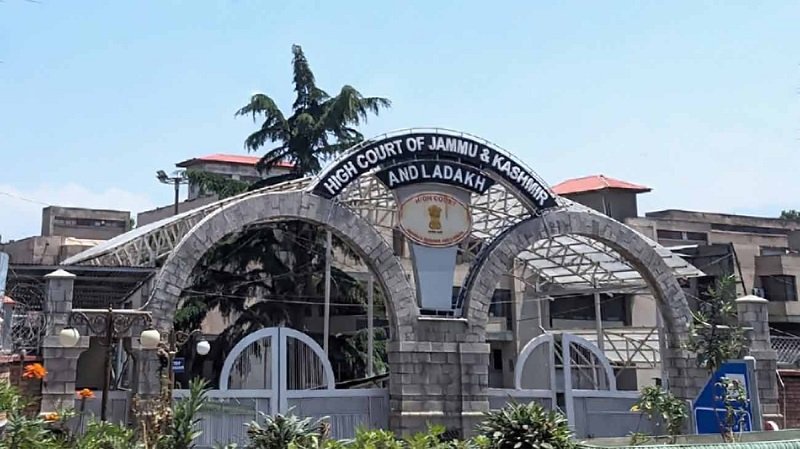
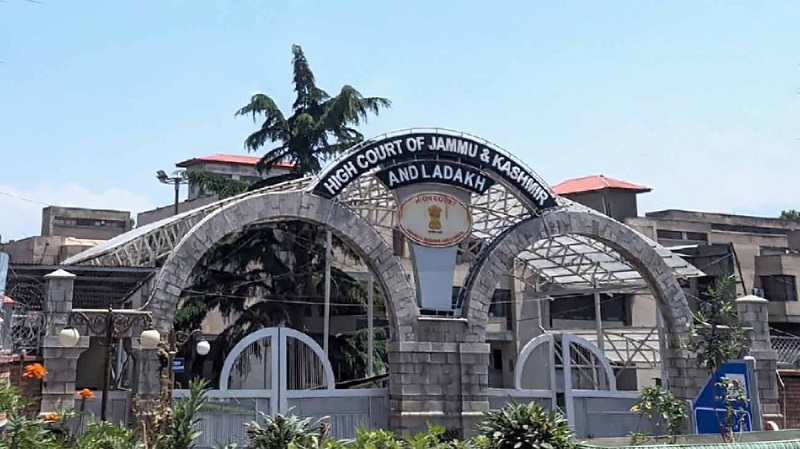
Srinagar- Emphasizing the strict standard of proof required in corruption cases, the High Court of J&K and Ladakh on Monday acquitted a Patwari (revenue official) in a decades-old corruption case.
The Patwari, Muhammad Shaban Wani, had been convicted and sentenced on 29 September 2004 by the Court of Special Judge, Anti-Corruption Srinagar in a 1986 corruption case.
Allowing Wani’s appeal filed in 2004, a bench of Justice Sanjay Dhar held that mere recovery of tainted money was not sufficient to prove bribery unless demand and voluntary acceptance are established by clear and clinching evidence.
“Allegations of bribery must be examined in the backdrop of all attendant circumstances and demand must be established by clear and clinching evidence,” the court said while setting aside the conviction and sentence to Wani, who had been sentenced to two years’ rigorous imprisonment under Section 5(2) of the Jammu and Kashmir Prevention of Corruption Act and one year under Section 161 RPC.
The case arose from FIR No. 40/1986 registered by the Vigilance Organization Kashmir, alleging that the appellant demanded a bribe of Rs 1,000—later reduced to Rs 800—for issuing a revenue extract required for the sale of land. During a trap laid on September 15, 1986, Rs 700 was claimed to be recovered from Wani and Rs 100 from another Patwari, who was later discharged.
Re-examining the evidence, the High Court noted that the complainant had turned hostile and categorically denied making any payment or witnessing any demand for bribe. Crucially, the shadow witness also failed to depose that he had seen the complainant hand over the money to the accused, raising serious doubts about the prosecution version.
The Court observed that the trial court had relied heavily on recovery and phenolphthalein test results, overlooking the settled legal position that proof of demand is the sine qua non for conviction in bribery cases.
“The learned Trial Court proceeded on the premise that once the money was recovered from the pocket of the appellant and there was no contradiction in the recovery evidence, it must be presumed that the same was in pursuance of demand. Such conclusion is contrary to the settled legal position,” the Court said, adding, “For proving a trap case, four essential ingredients are required: (i) demand of illegal gratification, both initial and at the time of trap; (ii) acceptance of money pursuant to such demand; (iii) recovery of tainted money; and (iv) motive or consideration for demanding such money.”
Citing Supreme Court judgments in B. Jayaraj v. State of Andhra Pradesh and Selvaraj v. State of Karnataka, the Court reiterated that recovery alone, without proof of demand and acceptance, cannot sustain a conviction.
It was further noted that the alleged trap was conducted in a private house, the owner of which did not support the prosecution case, and that the accused had plausibly explained that he was ill and had deputed another Patwari to prepare the revenue extract.
Holding that the prosecution failed to prove demand and voluntary acceptance of illegal gratification beyond reasonable doubt, the High Court concluded that the conviction was based on conjectures and suspicion rather than legally admissible evidence.
“The finding recorded by the learned Trial Court that the complainant may have been won over is purely conjectural and is not supported by any cogent evidence,” the Bench said, adding, “The Hon’ble Supreme Court in Selvaraj has categorically held that courts cannot draw adverse inferences against the accused on mere assumptions, particularly when the prosecution itself has failed to establish the foundational facts of demand and acceptance.”
Accordingly, the appeal was allowed, the conviction and sentence were set aside, and Wani was acquitted of all charges.