By Mohammed Mudassir
New Delhi / Srinagar – In a landmark shift for global trade, India and the European Union (EU) have officially finalised a long-awaited Free Trade Agreement (FTA) that will significantly reduce import tariffs on European-built cars — a move widely expected to reshape the Indian luxury and performance car market. The deal, described by officials as one of the most important trade agreements in years, opens the door for more affordable European automobiles for Indian customers, including enthusiasts in Srinagar and across Jammu & Kashmir.
What the New Tariff Structure Means:
Under the agreement, tariffs on fully built cars imported from EU countries will be phased down sharply over a number of years. Currently, European cars face effective import duties of around 110 % in India, but under the FTA this will first be reduced immediately (to around 40 %) and later gradually brought down to as low as 10 % — subject to quota limits of up to 250,000 vehicles annually.
This dramatic reduction is expected to bring about significant savings for buyers of some high-end imported vehicles, potentially cutting prices by 30 % to over 40 % compared with current rates, particularly for luxury and performance cars where import duties have historically been a dominant cost component.
European Cars Likely to See Price Drops:
While exact pricing after duty reductions will depend on manufacturer decisions and local taxes, the following broad estimates illustrate how prices could change:
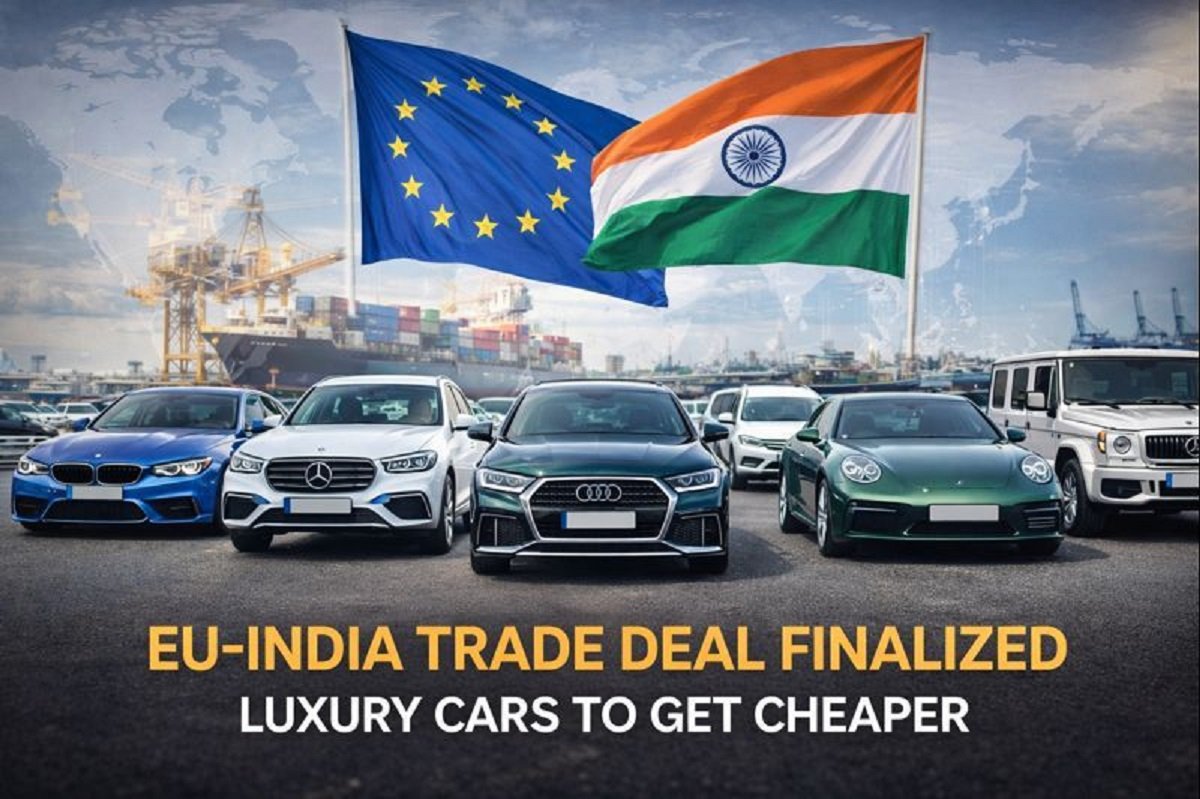
- BMW 3 Series – Current ex-showroom ~₹72.85 L – ₹73.95 L; estimated savings could reduce by ₹15–25 L in the long term as duties fall.
- Mercedes-Benz E-Class (imported variants) – Traditionally priced around ₹70 L +; could see significant reduction once duties fall near 10 %.
- Audi Q7 – Current ~₹86 L + ex-showroom; tariffs cut may result in savings of ₹20–35 L or more.
- Porsche 911 – Priced ~₹2 Cr; could come down substantially with phased tariff cuts, possibly by ₹60 L–₹80 L.
- BMW M4 Competition – Current ~₹1.52 Cr; estimated savings could top ₹40 L–₹60 L.
- Audi RS Q8 – Previously ~₹2.3 Cr; potential price cuts of ₹60 L–₹80 L depending on tariff phase.
- Mercedes-Benz G63 AMG – Premium imported SUV, currently ~₹2.9 Cr; could see duty-related savings well above ₹1 Cr as import duties fall.
Total savings will vary by model and exact implementation schedule, but early estimates suggest that once the full 10 % tariff regime comes into effect, buyers could save tens of lakhs to over a crore on high-end imported vehicles compared with previous pricing levels — provided manufacturers pass on the duty benefits to customers.
Impact on the Indian Automotive Sector:
The deal is expected to stimulate competition and broaden the choice of vehicles available to Indian buyers. With import duties reduced, European carmakers may introduce more performance models, niche variants, and flagship luxury cars in India that were previously limited due to high cost.
For the Indian automotive sector, this will encourage deeper integration with global supply chains. European brands may explore increased local assembly (CKD) or even expanded investment, bringing advanced technologies and premium vehicle platforms into India. Local manufacturers could benefit from cheaper imports of automotive components, reducing costs and supporting manufacturing competitiveness.
Benefits for Automotive Enthusiasts in Srinagar:
For car enthusiasts in Srinagar and the wider Kashmir region, the FTA’s effects are particularly exciting:
- Access to More European Models: Premium European brands that previously struggled to gain presence due to steep tariffs may now offer desirable models at relatively lower prices.
- More Competitive Pricing: As duties drop, buyers could see more competitive on-road prices for imported luxury cars — expanding options for those who value performance and prestige.
- Enhanced After-Sales and Service Ecosystem: Greater market penetration often leads to improved dealership networks, better servicing options, and easier availability of parts.
- Technological Showcase: Newer, more technologically advanced cars — including performance and driver-assistance features — may become more feasible for buyers who previously found European imports too expensive.
Looking Ahead:
Although the tariff reductions will be implemented in phases over several years, the India-EU FTA marks a watershed moment for the Indian automotive industry and luxury vehicle buyers. While full affordability for middle-class consumers will remain constrained by factors such as GST, state taxes, and overall import costs, the pact could significantly boost choice and competition in the premium car segment.
With rapid growth expected in India’s automobile market and rising demand for high-end vehicles, this trade agreement is likely to redefine how European cars are priced, sold, and marketed in India — offering long-term benefits to both consumers and the broader automotive ecosystem.