Plasma technology, the energized gas behind lightning and tube lights, is becoming a focus of deep-tech research in Kashmir.
A homegrown startup is turning global science into experiments that can be built, tested, and studied locally.
What was once possible only in massive labs abroad is now taking shape in compact regional systems, giving students and engineers hands-on access to frontier technologies.
“Our deep-tech startup, Ignition Dynamics, began with a simple thought: frontier technologies like plasma physics and fusion shouldn’t belong to just a handful of global hubs,” says Ali Mohammad, CEO and Co-founder.
“Kashmir has brilliant minds and curiosity in abundance, but access to advanced experimental setups has been limited. We wanted to show that world-class deep-tech research can thrive here when curiosity is handled with the right tools.”
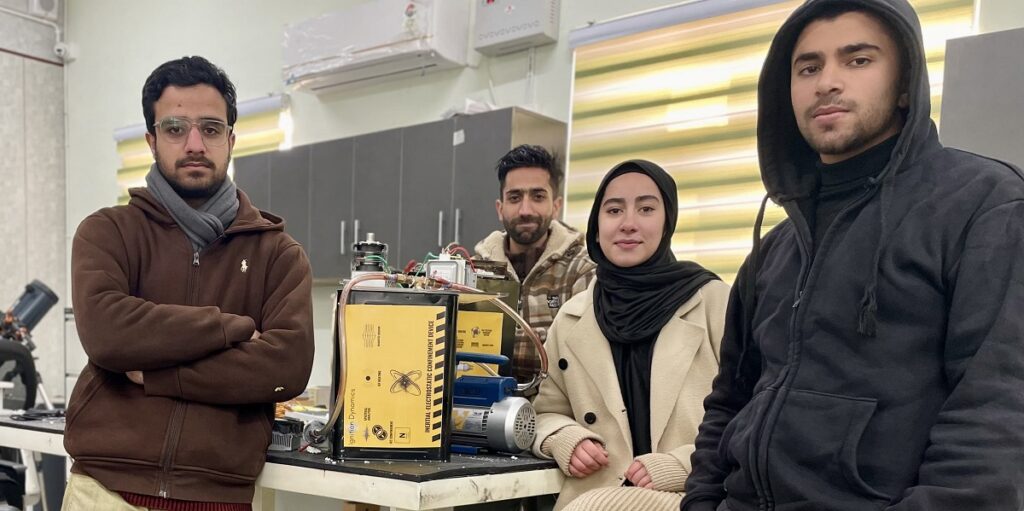
The startup’s first prototype, the Magnetized Plasma Testbed, allows researchers to study how plasma behaves under electricity and magnetic fields.
These experiments are essential for future fusion energy, but the knowledge and tools also have practical applications in electronics, medical devices, surface coatings, and space propulsion.
Working locally has pushed the team to design systems that are compact, efficient, and inventive, turning perceived limitations into strengths.
Beyond the machines, Ignition Dynamics is building a culture of scientific confidence.
Students gain hands-on experience with advanced systems, learn to experiment safely, and develop the skills to think like researchers.
The startup is showing that ambitious scientific ideas can grow locally and contribute to global innovation.
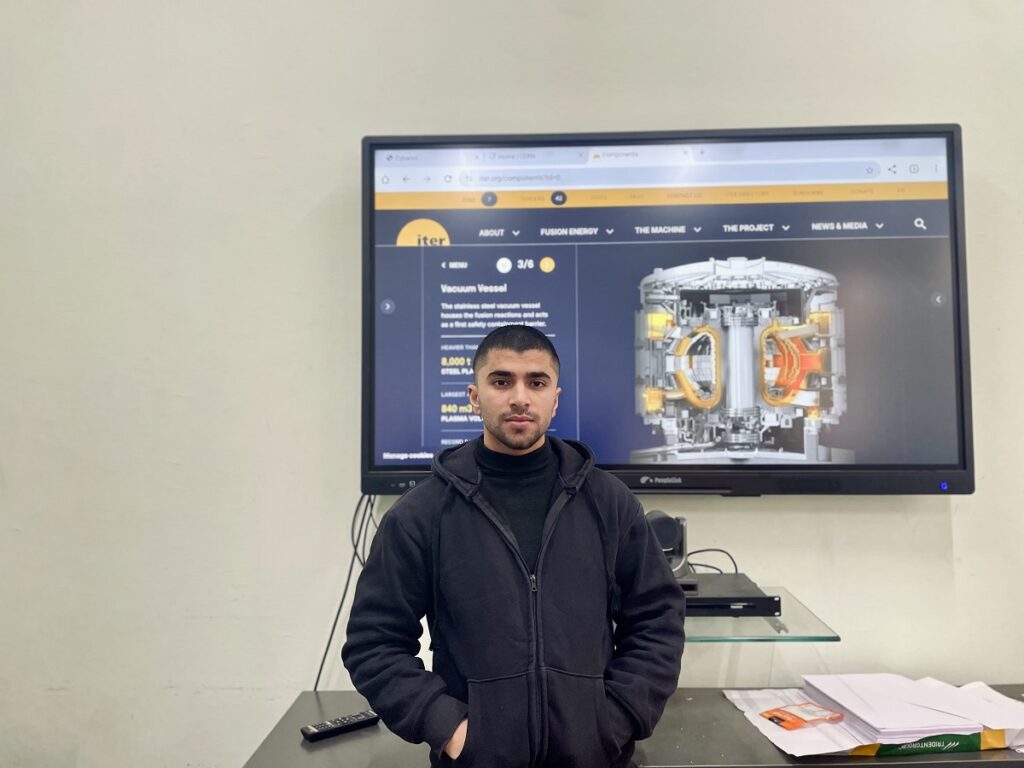
In this interview with Kashmir Observer, Ali Mohammad talks about how Ignition Dynamics is helping the valley emerge as a hub for global science.
What prompted you to start a deep-tech company like Ignition Dynamics in Kashmir?
It began with a simple thought: frontier technologies, like plasma physics and fusion, shouldn’t belong to just a handful of global hubs.
Kashmir has brilliant minds and curiosity in abundance, but access to advanced experimental setups has been limited.
Ignition Dynamics was born to bridge that gap.
We wanted to build homegrown plasma and fusion systems locally, proving that world-class deep-tech research can thrive here when curiosity is handled with the right tools.
Instead of waiting for national or international labs, we designed compact, modular platforms that let experimentation happen right here, while staying globally relevant.
Equally important, we wanted to show young researchers that tackling ambitious challenges like fusion energy is possible.
Starting in Kashmir turns a perceived limitation into a strength, through frugal, inventive engineering.
How would you explain your work to someone with no science background?
We explain our work by comparing it to building the engines and tools needed before creating something very big.
Large laboratories focus on the final, most powerful stage. We focus on the earlier stage, creating small, controllable systems that help scientists understand how hot gases called plasmas behave under electricity and magnetic fields.
Plasma is just an energized form of gas, like the stuff in lightning or tube lights. We build compact machines that safely create and study this gas and explore ways to control it.
These systems are useful for electronics, material coatings, medical devices, and space propulsion.
While large labs focus on producing fusion power, our work focuses on building the tools and knowledge that make such breakthroughs possible and accessible.
Your first prototype is the Magnetized Plasma Testbed. What does it do, and why is it important for future fusion research?
The Magnetized Plasma Testbed is a compact experimental system that creates plasma and studies how it behaves when exposed to electric currents and magnetic fields in a controlled environment. It lets us “switch on” plasma, heat it in different ways, and observe its response within a small laboratory setup.
This is important because fusion depends on understanding how plasma can be heated, confined, and kept stable. Our testbed demonstrates fundamental techniques used in fusion systems: electrical heating, radio-frequency heating, and magnetic configurations that guide plasma.
By studying these effects at a smaller scale, we can validate ideas, train people, and improve designs before applying them to larger, more expensive fusion machines.
It serves as a stepping stone, building practical knowledge and technical capability essential for advancing fusion research.
Why did you decide to start this company in Kashmir instead of a major tech hub?
We chose Kashmir because meaningful technology development shouldn’t be limited to established hubs.
The region has young talent and academic potential but often lacks exposure to advanced experimental work.
By starting here, we wanted to prove that deep-tech research can grow locally when the right environment is created.
Building in Kashmir pushes us toward frugal, thoughtful engineering. Working under constraints drives us to design compact, efficient systems rather than relying on large budgets or imported solutions.
This approach aligns with our goals in plasma and fusion technology, where innovation comes from deep understanding rather than scale alone.
Most importantly, we want to create a local ecosystem where students and engineers can engage directly with advanced technologies and contribute to global progress without leaving the region.
How has being incubated at Greenovator Incubation Foundation at NIT Srinagar helped you in the early stages of this journey?
Being incubated at Greenovator has been crucial. It provided a structured environment where an ambitious deep-tech idea could be shaped into a working startup, giving us guidance, institutional credibility, and confidence to pursue technically challenging work from Kashmir.
The mentorship of Dr. Saad Parvez has been invaluable. His belief in our vision and practical advice helped us stay focused. Shahid Abbas Mir has offered strategic insights that helped us think beyond hardware toward building a sustainable venture.
Collaborating with academics like Professor Prince Ganai and Dr. Dinesh Kumar Rajendran has strengthened our scientific and engineering depth.
Greenovator has supported us technically and strategically while creating a network of mentors and collaborators that continues to shape Ignition Dynamics.
What kind of technical skills and hands-on experience are young engineers and researchers gaining by working with Ignition Dynamics?
Young engineers gain hands-on experience building and operating real hardware at the intersection of physics and engineering. They learn to design, assemble, and troubleshoot systems involving high voltages, vacuum technology, magnetic fields, RF systems, and plasma diagnostics.
They develop practical skills in vacuum system design, electromagnet design, power electronics, RF generation, sensor integration, and optical diagnostics. They learn to safely operate complex experimental setups, analyze real data, and iterate designs based on observations rather than assumptions.
Beyond technical skills, they gain system-level thinking: understanding how subsystems interact, documenting experiments, working within constraints, and translating scientific ideas into functional prototypes.
This prepares them for research roles, advanced engineering, deep-tech startups, and applied industrial R&D.
Beyond future fusion energy, what practical or near-term applications can come out of your plasma research?
Plasma research has many near-term applications. The same principles used to generate and control plasma are essential in semiconductor manufacturing for thin-film deposition, etching, and materials processing. Our work contributes to developing indigenous plasma tools for electronics, sensors, and advanced materials.
Plasma research links directly to space technologies. Electric propulsion systems like ion thrusters rely on controlled plasma behaviour.
Another important application is medical cyclotrons, which produce radioisotopes for cancer diagnosis and PET imaging. Cyclotrons require precise electromagnetic field control and vacuum systems that overlap with our plasma research, helping develop more accessible indigenous cyclotron technology.
Additionally, plasma technologies are used in surface coatings, sterilization of medical equipment, and industrial diagnostics. Our work can yield practical tools, subsystems, and trained manpower for industry and healthcare while building toward long-term fusion goals.
Deep tech startups take time and effort. What have been the biggest challenges for you, especially working from Kashmir?
One major challenge is the long timelines deep-tech demands. Working with plasma and fusion technologies means dealing with complex physics, hardware iterations, and safety-critical systems where progress is steady but not immediately visible. This requires sustained patience and learning from failures.
Working from Kashmir brings unique challenges. Access to specialized components and high-end equipment is slower and costlier than in major hubs. The local deep-tech ecosystem is small, with fewer mentors, suppliers, and examples to learn from. These limitations force careful design choices and prioritization, which in turn drive frugal and innovative engineering.
We see these challenges as part of the journey. Working from Kashmir has strengthened our problem-solving mindset and boosted our belief that with collaboration, mentorship, and persistence, deep-tech innovation can thrive even in non-traditional regions.
Do you see Ignition Dynamics just as a company, or also as a platform to foster scientific confidence and research culture in Kashmir?
We see Ignition Dynamics as more than just a company. While we build advanced plasma and fusion technologies, we also aim to foster scientific confidence and a research culture in Kashmir.
One of our key goals is to show that people here can work hands-on with frontier technologies and contribute to global science.
By creating accessible experimental systems and involving students directly, we want to demystify advanced research. This hands-on experience replaces the idea that cutting-edge science only happens elsewhere and builds confidence that it can be done locally.
Over time, we hope Ignition Dynamics becomes a hub where curiosity, experimentation, and long-term thinking thrive. We also want it to be a place where collaboration between academia, industry, and young researchers naturally grows, helping develop skills, mindset, and research culture alongside technological progress.
How do you want young students in Kashmir to look at science and technology after seeing initiatives like yours?
We want young students to see science and technology as real, accessible, and worth pursuing with confidence. Instead of viewing advanced fields like plasma physics or fusion as distant or unreachable, we want them to feel these areas are open to them, regardless of where they are from.
More importantly, we want them to see science as something hands-on and creative where curiosity, experimentation, and persistence matter.
Our initiative shows it is possible to build, test, fail, and improve real systems locally, and that meaningful contributions to global technology can start from here.
If students believe they can work on hard problems, ask ambitious questions, and stay rooted in the region while doing globally relevant work, we would consider that a success.
Looking ahead, where do you see Ignition Dynamics in the next five to ten years, and what message would you give policymakers about supporting deep tech in Kashmir?
In the next five to ten years, we see Ignition Dynamics as a mature deep-tech organization, developing advanced plasma and accelerator systems for research, industry, and strategic applications.
We aim to move from compact plasma testbeds to high-power platforms for fusion research, semiconductor processing, medical devices, and electric propulsion.
We also want to be a hub for hands-on scientific learning, where students and engineers gain experience, collaborate globally, and build careers locally.
To policymakers, we say frontier science can thrive in regions like Kashmir with sustained support.
Deep-tech startups build skills, technology, and research culture. Long-term funding, access to infrastructure, mentorship, and space to experiment are essential.
Decentralizing research strengthens talent and innovation beyond traditional hubs.