
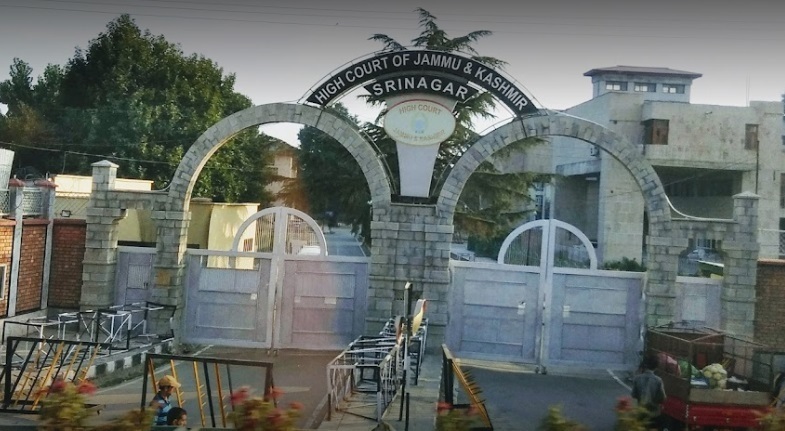
Srinagar- The High Court of J&K and Ladakh on Friday held that the declaration of the Roshni Act as unconstitutional does not, by itself, bar prosecution of public servants and beneficiaries under the Prevention of Corruption Act (PC) Act, but quashed criminal proceedings in cases where no evidence of corrupt intent or undue benefit was found.
A bench of Justice Sanjay Dhar, while deciding a batch of 11 petitions, ruled that although the Jammu and Kashmir State Lands (Vesting of Ownership to the Occupants) Act, 2001) popularly known as the Roshni Act has been declared void ab initio by the court’s Division Bench in case of Professor S.K. Bhalla v. State of J&K, criminal liability under the PC Act can still arise if acts of bribery, abuse of official position or conspiracy are established.
The Court observed that the accused persons are not being prosecuted for violations of the Roshni Act itself, but for alleged criminal misconduct under Section 5(1)(d) read with Section 5(2) of the J&K Prevention of Corruption Act.
“To say that a public servant who has taken bribe or illegal gratification while implementing the Roshni Act would get scotfree because the Roshni Act has been declared unconstitutional would be illogical and preposterous,” the court said.
The Court emphasized that even if, pursuant to the judgment in Professor S.K. Bhalla’s case, the beneficiaries/accused are required to surrender the State land vested in them back to the State, such surrender would not, by itself, result in their exoneration from charges of criminal misconduct. The Court held that where the material on record discloses that proprietary rights over the land were obtained by the beneficiaries through conspiracy with public servants who misused their official position to confer such benefits illegally, criminal liability would continue to subsist.
“Once an offence has been committed by a person, merely because the benefit derived by the said person has been restituted in favour of the person against whom the said offence has been committed, cannot lead to the obliteration of the offences committed.”
The court noted that the CBI investigations stem from explicit and wide-ranging directions issued by the Division Bench in the SK Bhalla judgment, which had termed the Roshni scheme a massive land scam involving arbitrary, dishonest and illegal vesting of State land. The Court reiterated that it cannot dilute or bypass those binding directions mandating investigation and prosecution wherever criminality is disclosed.
However, in the specific cases before the Court, the petitioners—public servants involved in land allotments—were granted relief. Crucially, the court found, there was no material on record to show that the officials had obtained any pecuniary advantage, adopted corrupt means, or acted with dishonest or mala fide intent.
“In the absence of any material on record to show that the accused public servants had either adopted any corrupt means or obtained any pecuniary advantage for themselves, it cannot be stated that the offence of criminal misconduct is made out against them,” the court said, underlining that dishonest intention was the gist of the offence under Section 5(1)(d) of the Prevention of Corruption Act which is punishable under Section 5(2) of the Act. “Unless it is shown that a public servant has, by corruption or illegal means, abused his position, it cannot be stated that he has committed the offence of criminal misconduct,” the court said.
Accordingly, the Court quashed the impugned charge-sheets and all proceedings arising there from against the petitioners in specific cases, while reaffirming that serious cases involving abuse of office, bribery or conspiracy under the Roshni Act framework remain liable for criminal prosecution.