
By Prof Hamid Naseem Rafiabadi
Tehran’s top troupe arrived in New Delhi with a political performance carefully staged for a changing world order.
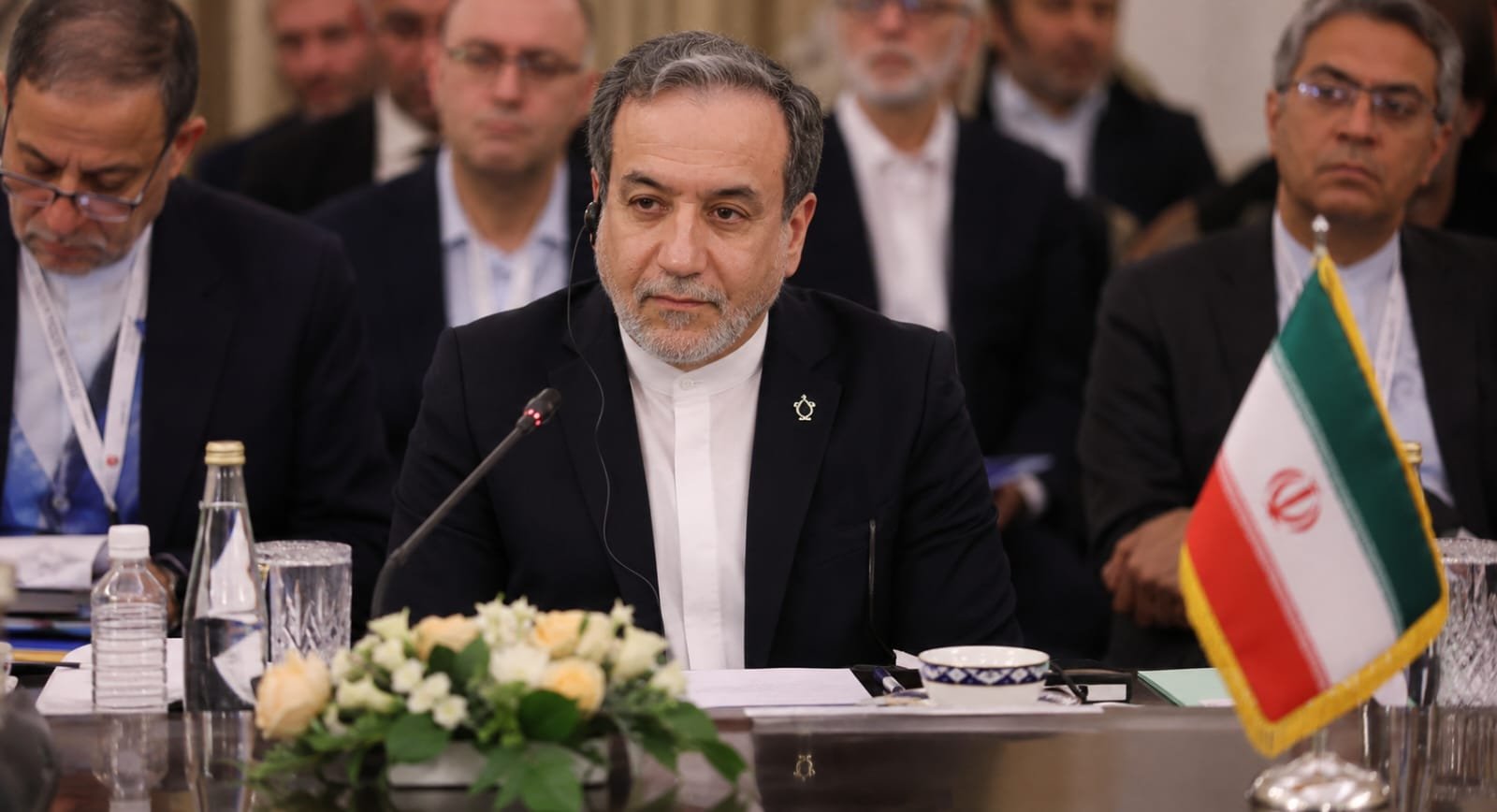
Foreign Minister Abbas Araghchi spoke at the BRICS foreign ministers’ meeting with the language of defiance, calculation, and strategic outreach. The message was aimed at two audiences at once: Washington heard a warning against pressure and confrontation, while emerging powers heard an invitation to help draft a different diplomatic order.
The speech drew attention because it revealed a noticeable shift in tone.
Tehran still speaks through the vocabulary of resistance and sovereignty, though it now places equal emphasis on negotiations and political engagement.
Araghchi’s declaration that there is “no military solution” on Iran marked one of the clearest acknowledgments from Tehran that the current regional crisis demands diplomacy rather than escalation.
That statement had massive impact because it came during one of the most combustible moments in the Middle East in years. Regional tensions continue to rise, while shipping lanes remain vulnerable. Energy markets react to every military signal from the Gulf.
Global powers watch closely because any confrontation involving Iran would spread rapidly through oil markets, maritime routes, and regional alliances.
Araghchi framed the central obstacle with unusual bluntness: trust. He argued that Iran has ample reasons to distrust the United States after decades of sanctions, military threats, and abandoned agreements. Tehran still views Washington’s withdrawal from the nuclear deal as proof that Western commitments can dissolve with changing administrations and domestic politics.
That grievance sits at the center of modern Iranian foreign policy.
Since the 1979 revolution, Iranian leaders have built political legitimacy around resistance to foreign pressure. Economic sanctions, diplomatic isolation, and military confrontation strengthened that worldview rather than weakening it. Tehran now presents endurance itself as a geopolitical victory.
Araghchi pushed that narrative further when he claimed the United States turned toward negotiations only after military pressure failed. That argument serves a clear strategic purpose.
Iran wants diplomacy to appear as recognition of Iranian strength rather than concession under pressure. Tehran believes such framing protects domestic political credibility while preserving leverage abroad.
Military confrontation with Iran would carry staggering consequences far beyond the region. Iran occupies one of the world’s most strategically sensitive positions. Its alliances, missile capabilities, and maritime influence give Tehran the ability to disrupt commerce far beyond its borders. Global energy markets understand that reality well.
The Strait of Hormuz remains the clearest example. A substantial share of global oil and gas supplies passes through that narrow corridor. Araghchi acknowledged that conditions there have grown increasingly complicated, though he also stated that Iran continues to permit neutral commercial traffic. His warning came with deliberate precision: countries engaged in war against Iran should expect consequences.
That message landed far beyond the Gulf.
Oil-importing economies in Asia, Europe, and Africa understand the stakes immediately. Rising shipping costs, energy shocks, and supply-chain disruptions would spread quickly through already strained global markets.
India entered the conversation at exactly that point. New Delhi provided more than a diplomatic venue for the BRICS meeting. India now occupies a pivotal position in the emerging balance between Western powers and rising non-Western coalitions. Tehran recognizes that influence clearly.
Araghchi openly encouraged India to play a stronger political role in the Middle East. That appeal shows India’s growing diplomatic profile as well as its longstanding ties with Iran.
Projects like the Chabahar Port carry enormous strategic value for India’s regional connectivity ambitions. Energy dependence also gives New Delhi a direct interest in Gulf stability.
India’s position remains uniquely complex. Prime Minister Narendra Modi maintains strong ties with Washington while preserving relationships with Tehran and Moscow. External Affairs Minister S. Jaishankar has repeatedly stressed the dangers of instability in the Gulf because India understands how deeply regional conflict would affect its economy.
China also emerged as a central player in Araghchi’s remarks. He praised Beijing’s diplomatic intentions and welcomed Chinese involvement in regional negotiations. That praise describes the deepening partnership between Tehran and Beijing over recent years.
Western sanctions pushed Iran closer to China economically and politically. Beijing became one of Tehran’s most significant partners during periods of isolation. Chinese diplomacy in the Middle East has also expanded gradually, particularly after Beijing helped facilitate rapprochement between regional rivals.
Iran now views China as both economic lifeline and geopolitical counterweight.
That broader alignment points toward a larger transformation in global politics. Institutions such as BRICS and the Shanghai Cooperation Organisation increasingly function as platforms for states seeking alternatives to Western-led financial and diplomatic systems. Iran sees those institutions as pathways out of isolation and into a more multipolar international structure.
That vision, however, still faces major obstacles.
BRICS members share frustration with Western dominance, though they pursue different strategic interests. India maintains deep security cooperation with the United States. China and Russia back Iran diplomatically while advancing their own geopolitical calculations. Unified alignment remains elusive.
Relations between Tehran and Washington also remain burdened by decades of hostility, proxy conflicts, sanctions, and military confrontations. Political mistrust runs deep on both sides. Regional rivalries involving Israel and Gulf states add another volatile layer.
Even with those tensions, Araghchi’s speech marked an important diplomatic moment because it blended confrontation with pragmatism.
Iran projected strength while keeping the door to negotiations open. Tehran signaled that pressure campaigns would fail while diplomacy still held value if conducted through mutual sovereignty and political equality.
That combination reveals how much the global order has changed.
Emerging powers now expect a larger role in conflict resolution, economic governance, and regional diplomacy. Western capitals still hold enormous influence, though they no longer control every negotiating table or diplomatic initiative.
New Delhi became the perfect stage for that transition. Iran used the BRICS platform to speak beyond its immediate adversaries and toward a broader coalition of rising powers searching for greater influence in international affairs.
The larger message reached well beyond Iran itself.
Military coercion now produces diminishing returns in an interconnected world tied together by energy routes, trade networks, and economic interdependence.
Diplomacy remains difficult, uneven, and deeply frustrating. But global stability still depends upon it.
Araghchi’s speech captured that reality with unusual clarity.
Tehran still speaks through resistance, historical grievance, and national sovereignty. Diplomacy now sits beside that language as strategic necessity.
That shift may define the next chapter of Middle Eastern politics and the wider contest over who writes the rules of the emerging global order.
- The author is a reputed Kashmiri academic known for his work on Islamic philosophy, comparative religion, and Muslim intellectual history. He has taught at the University of Kashmir and the Central University of Kashmir and has written extensively on religion, society, and contemporary Islamic thought.