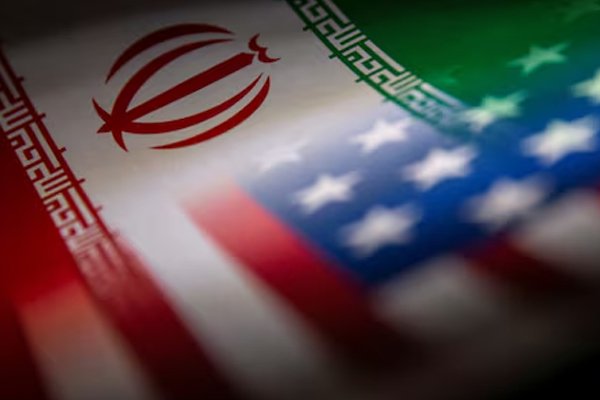
Obbuergen (Switzerland) – Iran and the United States held their first direct negotiations in years on Sunday, with Tehran insisting that any progress toward a broader peace agreement depended on Washington fulfilling commitments to halt Israeli attacks on Lebanon and implement key provisions of a recently signed memorandum aimed at ending months of regional conflict.
The talks, held at the luxury Bürgenstock resort overlooking Lake Lucerne, brought together Iranian and US delegations in the same room for the first time, alongside mediators from Pakistan and Qatar. The meeting lasted around 80 minutes before the Iranian side withdrew for internal consultations, according to Iranian media.
The negotiations launched a 60-day process outlined in the 14-point Islamabad Memorandum of Understanding (MoU), signed earlier this week after months of diplomacy following a ceasefire that ended a 39-day US-Israeli military campaign against Iran.
Iran’s delegation was led by Parliament Speaker Mohammad Baqer Qalibaf and Foreign Minister Abbas Araqchi, while US Vice President JD Vance headed the American team, accompanied by presidential advisers Jared Kushner and Steve Witkoff. Pakistani Prime Minister Shehbaz Sharif and Army Chief Field Marshal Asim Munir, together with Qatari Prime Minister Sheikh Mohammed bin Abdulrahman Al Thani, acted as mediators.
Before the formal talks, Ghalibaf held separate consultations with Pakistani and Qatari officials, while Araghchi met Swiss Foreign Minister Ignazio Cassis.
Iranian officials entered the negotiations warning that the success of the process hinged on Washington’s implementation of obligations contained in the memorandum, particularly provisions related to ending hostilities across the region.
“The main focus of today’s discussions is the implementation of Article 13 of the memorandum,” Iranian Foreign Ministry spokesman Esmaeil Baghaei told reporters in Bürgenstock.
According to Tehran, Article 13 requires several preliminary measures before negotiations on a final settlement can proceed, including an end to military operations in Lebanon, temporary sanctions relief, the release of Iranian frozen assets and steps to reopen maritime routes.
Baghaei said Israel’s continued military operations in Lebanon represented a violation of the agreement.
“This clause has not been fully implemented so far, and the Zionist regime continues to violate its commitments in Lebanon,” he said. “This issue will be one of the main focal points of today’s talks.”
Iran’s official IRNA news agency reported that Tehran would seek guarantees from mediators that Washington would ensure full implementation of the memorandum, including an end to attacks against Iran and its regional allies.
A member of the Iranian negotiating team, Hossein Ghorbanzadeh, said Lebanon dominated discussions during both bilateral and multilateral meetings.
“Lebanon received greater attention than any other topic because it is considered one of the principal fronts where an end to the conflict must be declared,” he said.
“If progress is not achieved on the Lebanon issue, other provisions of the memorandum will not move into the negotiation and implementation phases.”
The negotiations also addressed economic issues, including temporary sanctions exemptions for Iranian oil exports and the release of frozen Iranian funds abroad.
Ghorbanzadeh said a draft agreement covering temporary sanctions waivers for Iranian oil and petroleum products had already been finalised and could be implemented soon.
Experts from Iran, Qatar and the United States were also discussing mechanisms for releasing Iranian assets blocked overseas, he added.
The talks took place amid heightened tensions over the Strait of Hormuz, through which roughly one-fifth of global oil consumption passes.
On Saturday, Iran’s Revolutionary Guards announced the closure of the strategic waterway to all vessels, citing what Tehran described as US violations of commitments under the Islamabad agreement.
Washington is pressing Iran to keep the shipping lane open while also seeking long-term assurances regarding Tehran’s nuclear programme, which Western powers suspect could have military dimensions. Iran insists its nuclear activities are entirely peaceful.
Speaking before the talks, Vance said there was an opportunity to “turn over a new leaf” in relations between the two countries and build on last week’s interim agreement.
The meeting was also notable for its carefully managed optics.
According to sources familiar with the negotiations, Iranian officials rejected a proposal for a joint photograph and public handshake with the US delegation before the talks began.
Organisers proceeded with media events without the Iranian representatives, who entered the conference venue only after journalists had left.
Iranian officials said they wanted negotiations judged by substantive outcomes rather than symbolic gestures.
“The Iranian side sought to avoid a media spectacle and keep discussions focused on practical implementation,” a source close to the talks said.
The closed-door format underscored Tehran’s cautious approach as the two adversaries attempt to transform a fragile ceasefire into a broader political settlement.
The outcome of Sunday’s discussions is expected to determine the agenda and structure of a second round of negotiations, with both sides seeking a comprehensive agreement addressing regional security issues, sanctions relief, maritime security and Iran’s nuclear programme.
While significant differences remain, diplomats from all four delegations described the opening session as a critical test of whether the Islamabad memorandum can evolve into a durable framework for peace after years of confrontation.