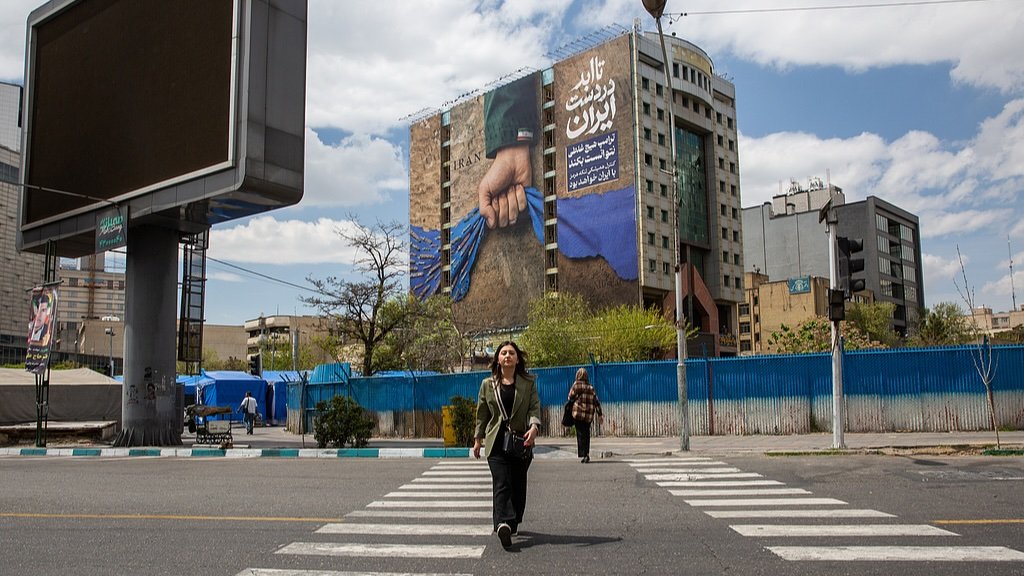

Tehran/Washington – US President Donald Trump’s renewed threats of possible military strikes on Iran injected fresh uncertainty into already stalled diplomacy, prompting sharp responses from Tehran and raising concerns over a broader regional escalation as peace efforts remained in limbo.
Trump signalled that Washington could launch another military strike against Iran, saying he had not ruled out further action and suggesting any operation could occur within days.
“I hope we don’t have to go to war, but we may have to give them another big hit. I’m not sure yet,” Trump told reporters, adding that strikes could come “maybe Friday, Saturday, Sunday,” or next week.
The comments drew swift responses from Iranian leaders, who warned that any renewed attack would trigger wider consequences beyond the Gulf region.
Iran’s Islamic Revolutionary Guard Corps (IRGC) said Washington should not assume Tehran had exhausted its military capabilities.
“The American-Zionist enemy… must know that despite the offensive carried out against us using the full capabilities of the world’s two most expensive armies, we have not deployed the full power of the Islamic Republic,” the IRGC said in a statement.
The exchange underscored how fragile diplomatic contacts between Washington and Tehran remain, with both sides publicly discussing negotiations while simultaneously issuing military warnings.
U.S. Vice President JD Vance later sought to balance pressure with diplomacy, saying Washington remained prepared for action but believed Tehran wanted an agreement.
“What I think is that the Iranians want to make a deal,” Vance said. “Iranians recognise that a nuclear weapon is the red line for the United States.”
“But we’re not going to know until we’re actually putting pen to paper,” he added, while stressing the United States remained “locked and loaded”.
Iranian Foreign Minister Abbas Araqchi also accused Washington of sending mixed signals, saying contradictory US positions had become a major obstacle to diplomacy. Writing on X, Araqchi warned Tehran had “many more surprises” in store should Washington resume what he described as unprovoked aggression, adding that Iran had drawn important lessons from previous confrontations.
Araqchi also pointed to a recently released Congressional report that he said highlighted the costs of earlier military exchanges. According to Iranian officials, the report acknowledged extensive US material losses during the conflict.
According to the report, the US Air Force lost at least 42 aircraft during the 40-day war, with estimated losses already reaching roughly $2.6 billion.
American lawmakers warned that the actual financial cost could be significantly higher because it remains unclear whether the Department of War has fully accounted for all combat losses, Araqchi added.
The renewed war rhetoric has also refocused attention on the strategic Strait of Hormuz, a key energy chokepoint through which a significant share of global oil shipments passes. Iranian officials reiterated the waterway’s strategic importance, reviving market concerns that any broader confrontation could disrupt global energy supplies and fuel price volatility.
Military officials in Tehran also maintained a hard line. Major General Ali Abdollahi said any future attack by the United States or its allies would be met with overwhelming force, while army spokesman Brigadier General Mohammad Akraminia warned that Iran could open “new fronts” using new tools and methods if hostilities resume.
Meanwhile, regional tensions continued elsewhere. Israeli media reported expanded Hezbollah drone activity in southern Lebanon, while Pakistan’s defence minister, Khawaja Muhammad Asif, said a return to large-scale U.S.-Israeli military operations against Iran appeared unlikely given broad international opposition and limited domestic support within the United States.
These additions add geopolitical depth, military context, energy implications and regional spillover without turning the piece into a chronology dump.