By Mohammad Hanief
The mornings in Kashmir now rise through soft veils of fog. Evenings fall earlier, and the crisp wind carries the sharp edge of winter.
Frost glints on rooftops and orchards, turning familiar streets and fields into a shining landscape.
This is the return of a season that has shaped the valley’s economy, culture, and way of life for generations.
Winter has always been a time of anticipation here. The cold is hard, but it brings visitors eager to see the valley in its most dramatic form.
Tourism, after a challenging period, has bounced back. Between 2019 and 2024, more than nine million travellers arrived in Jammu and Kashmir, with nearly three million last year alone.
Hotels, guides, taxi drivers, artisans, and countless small businesses rely on this influx to keep their livelihoods alive.
This year, the early chill has brought optimism. Hotels in Srinagar, Tangmarg, Gulmarg, and Pahalgam report steady bookings for December and January.
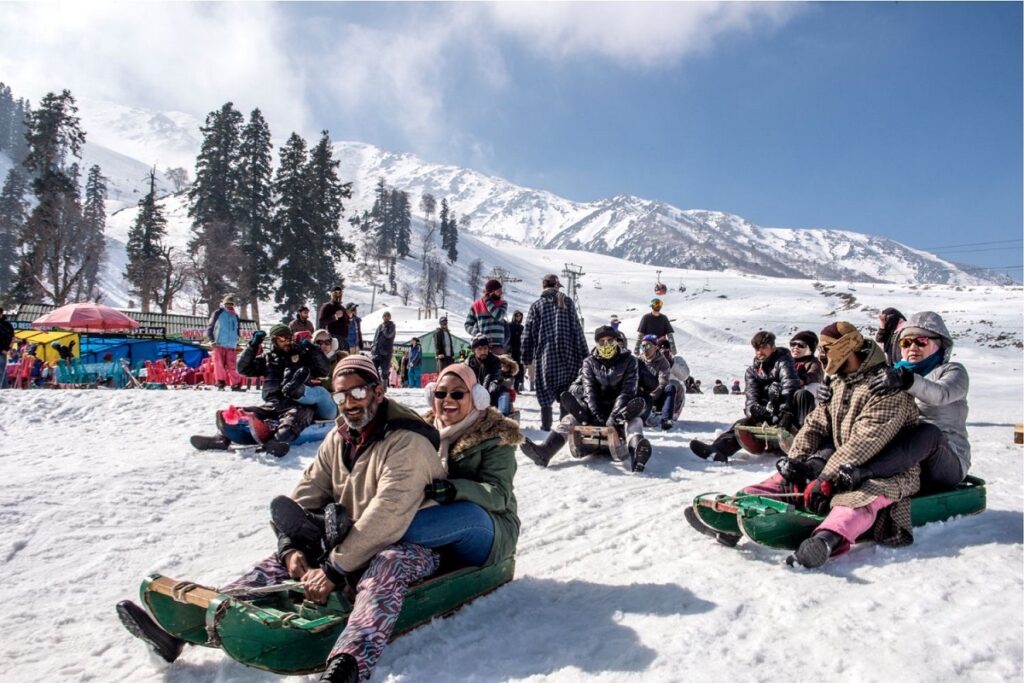
Gulmarg, with over 1.3 million visitors last year, remains the valley’s winter crown jewel. Skiers and snow sports enthusiasts from Europe, Central Asia, and the Middle East are drawn to its slopes, chasing early snowfall and the promise of a Himalayan winter.
Srinagar offers a different kind of winter experience.
Dal Lake mirrors muted colours under a thin sheet of ice. Houseboats, warmed by bukharis and decorated with Kashmiri tapestries, invite visitors into a traditional winter stay.
In narrow lanes around Hazratbal, Rainawari, Khanyar, and Zaina Kadal, the smell of harissa cooking in dawn kitchens fills the air. Pherans and kangris are seen on every corner, blending local life with a sense of seasonal magic.
Beyond the city, destinations once known only in summer are drawing winter visitors.
Pahalgam’s snow-covered meadows offer nature-wellness walks, horse rides, and family retreats. Sonamarg slowly opens before heavy snowfall cuts off access. Yusmarg, Doodhpathri, Bangus Valley, and Gurez are seeing growing interest, thanks to better roads, rural homestays, and social media sharing.
Frozen streams, snowy meadows, and rustic village life are being discovered by travellers seeking something off the beaten path.
The economic impact of winter tourism is felt everywhere. From ski instructors to pony-wallahs, artisans to small shopkeepers, thousands depend on these months.
Handicrafts, including pashmina shawls, wooden carvings, carpets, and papier-mâché, see their highest demand. Local homestays and boutique lodges are spreading opportunities beyond traditional hubs, giving rural communities a stake in the season.
Authorities are preparing for the season with renewed focus. Roads vulnerable to snowfall have clearance machinery, Gulmarg’s slopes have upgraded first-aid centres, and Srinagar airport has improved winter visibility equipment. Ski patrols and controlled snow zones are helping adventure tourism grow safely.
Besides breathtaking experiences, winter also brings challenges. Heavy snow can delay flights, block roads, and disrupt power supply. The Srinagar-Jammu highway often closes due to landslides and snowfall, affecting both locals and visitors. Tourism operators are calling for better contingency planning, alternative routes, and improved communication systems.
Environmental concerns are growing as well. Increasing tourist numbers put pressure on fragile high-altitude areas. Waste management after snowfalls is difficult. Construction of hotels and resorts in scenic areas sparks debates about sustainable practices. Experts urge energy-efficient heating, eco-friendly architecture, and responsible adventure tourism to protect Kashmir’s delicate landscapes.
Still, as the valley settles into winter, optimism is tangible.
Tourists are returning to well-known destinations and discovering new corners of the region. From skiing and adventure sports to cultural immersion and rural winter life, Kashmir offers experiences for every traveller.
For locals, winter brings hardship and hope. For visitors, it offers landscapes softened by snow, lakes reflecting muted colours, and a culture that finds warmth in tradition.
If snowfall arrives on time and infrastructure keeps pace, the winter of 2025-26 could become one of Kashmir’s most rewarding seasons in years, reviving the economy and reaffirming the valley’s unique charm.