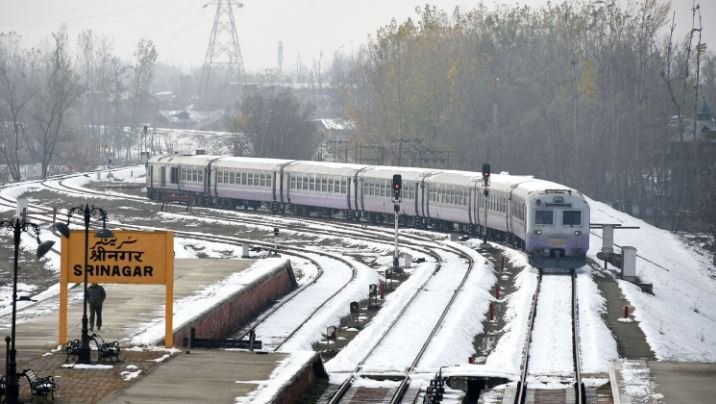
The renewed discussion on railway expansion and urban mobility in Jammu and Kashmir points to a quiet but important shift in how infrastructure is being imagined for regions with complex geography. The emphasis is no longer on extending conventional models uniformly across the country but on adapting technology and planning to local realities. In high-altitude and hilly terrains such as Jammu and Kashmir, railways are being viewed not just as transport corridors but as engineering systems that must respond to climate, terrain, livelihoods, and environmental sensitivity.
Urban mobility in Jammu has long remained an unmet aspiration. The idea of a metro or metro-like rail system reflects the growing pressures of urbanization and the need for efficient public transport. Yet the feasibility of such systems depends on more than demand alone. High-altitude conditions, seismic vulnerability, and sharply varying temperatures place unique demands on rolling stock, track design, and maintenance protocols. The acknowledgement that special train designs are being prepared for such conditions suggests an evolving mindset that values suitability over speed of execution. This shift also highlights a broader national challenge in railway infrastructure development. Across states, projects often encounter delays due to land acquisition hurdles and environmental clearances. Parliamentary debates have increasingly brought these issues into focus, revealing how infrastructure ambitions can collide with local concerns. In orchard-rich regions of northern India, for instance, rail alignments that threaten agricultural livelihoods have drawn resistance. The willingness to reconsider routes to protect apple orchards reflects a more consultative approach that seeks to balance connectivity with economic sustainability. Such decisions underline a critical policy challenge. Infrastructure must serve people without undermining the resources they depend upon. Railways have historically been symbols of integration and growth, but in ecologically fragile and agrarian landscapes, they must be planned with restraint and sensitivity. Avoiding fertile land and minimizing environmental disruption may slow projects, but it strengthens their legitimacy and long-term viability. Technological adaptation lies at the heart of this evolving approach. Moving from conventional rail designs to specialized engineering for high-altitude regions requires investment in research, testing, and customization. Trains designed for steep gradients, extreme cold, or variable weather are not off-the-shelf solutions. They demand collaboration between engineers, planners, and operators. While such customization increases upfront costs, it reduces operational risk and enhances safety and reliability over time. The debate also reflects questions of regional equity. Peripheral and geographically complex regions have often lagged in access to modern transport systems. Ensuring that rail modernization reaches these areas is not merely a matter of convenience but of inclusion. Better connectivity can stimulate local economies, support tourism, and improve access to education and healthcare. For Jammu and Kashmir, where terrain has historically constrained mobility, rail infrastructure holds transformative potential if implemented thoughtfully. At the same time, federal cooperation remains central to progress. Land acquisition and environmental approvals require close coordination between the Centre and state governments. When this coordination falters, projects stall and costs escalate. Parliamentary discussions have raised the issue of shared responsibility, where states and the Centre work together to address local concerns while advancing national infrastructure goals. The emerging narrative around rail and metro planning in Jammu and Kashmir suggests a gradual maturation of policy thinking. Rather than pushing standard solutions, there is growing recognition that infrastructure must be context-driven. People now view urban mobility, agricultural protection, environmental stewardship, and engineering innovation as interconnected rather than competing priorities.
This approach does not promise quick results. Customized designs, careful alignments, and extended consultations take time. Yet such patience may prove essential for building infrastructure that endures. In regions where geography resists uniformity, adaptation becomes the most practical form of ambition. If sustained with consistency and dialogue, this evolving railway strategy could offer a model for infrastructure planning in other challenging landscapes, where progress is measured not only by speed but by balance and resilience.