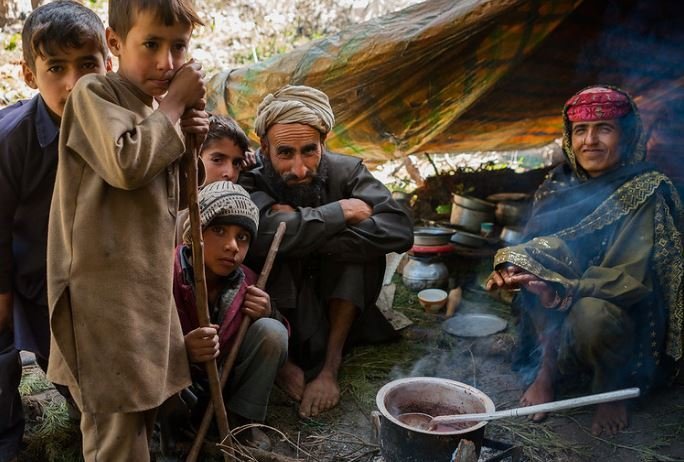
The review of the Multidimensional Poverty Index in Jammu and Kashmir brings attention to an important reality. Poverty is not only about how much money a family earns. It is also about whether a child gets education, whether a patient receives treatment, whether a home has proper facilities, whether a family has food security and whether people can live with dignity. A household may have some income and still suffer if it lacks basic services.
Jammu and Kashmir has made encouraging progress in reducing multidimensional poverty. The fall from 12.56 percent in 2015-16 to 4.80 percent during 2019-21 is significant. More than 10.45 lakh people moving out of multidimensional poverty shows that welfare schemes and development interventions have made a real difference. This progress should be acknowledged, but it should not become a reason to slow down. The families still living with deprivation need sharper attention now. The data shows that nearly 6.39 lakh people from around 1.28 lakh families were still multidimensionally poor as per NFHS-5 based estimates. These are not just figures in a report. They are families struggling with gaps in health, education, housing, sanitation, nutrition, fuel, financial access and basic opportunities. If development has to be meaningful, these families must feel the change in their daily lives. The decision to identify vulnerable households in every district, beginning with Antyodaya Anna Yojana families, is a practical move. These families are among the most vulnerable and should be reached first. Poverty reduction cannot remain limited to broad schemes and general claims. It must reach the household level, where the exact need of each family is understood and addressed. District-specific planning is also essential. Poverty does not look the same everywhere. Districts such as Ramban, Reasi, Kishtwar, Udhampur and Rajouri need focused attention because poverty ratios remain higher there. Baramulla, Udhampur, Rajouri, Kupwara and Ramban also require careful planning because the number of multidimensionally poor people is higher in absolute terms. A single uniform plan for all districts will not solve local problems. Centrally Sponsored Schemes have played an important role in improving living standards. Food security, Ayushman Bharat, housing schemes, Ujjwala Yojana, education initiatives, rural development programmes and financial inclusion have helped reduce deprivation. But these schemes must work together. A poor family should not have to run from one office to another for different benefits. The system must identify what the family lacks and connect it with all available support. The forthcoming NFHS-6 data will provide a fresh picture of poverty and deprivation. That data should be used with seriousness. It should not remain limited to presentations, files and meetings. It must guide district plans, annual budgets, village-level surveys and practical field action. If a family lacks a toilet, a safe house, health cover, school support or clean fuel, the administration must respond directly and quickly. The improvement in rural poverty is encouraging, but remote areas still need continued support. Difficult terrain, scattered habitations and weak access to services make poverty harder to address in many parts of Jammu and Kashmir. Development cannot be called inclusive if villages and far-flung families remain behind while urban centres move ahead. The real test of poverty reduction is not only in percentages. It is seen when a child continues school, when a mother gets healthcare, when a family has a safe home, when food reaches the poor and when people gain confidence that the system sees them. Jammu and Kashmir is moving in the right direction, but the next stage must be more focused, more humane and more accountable.
Poverty must be measured, but it must also be removed. Every vulnerable household should be identified, every deprivation should be addressed and every scheme should reach the person for whom it was designed. Development becomes meaningful only when it improves real lives, not merely official records. The government deserves appreciation for adopting an evidence-based approach to poverty reduction. It should now ensure household-level surveys, district-specific planning, scheme convergence and strict monitoring so every vulnerable family receives timely support, dignity and real improvement in living conditions.