
By Lt Gen. R. S. Reen
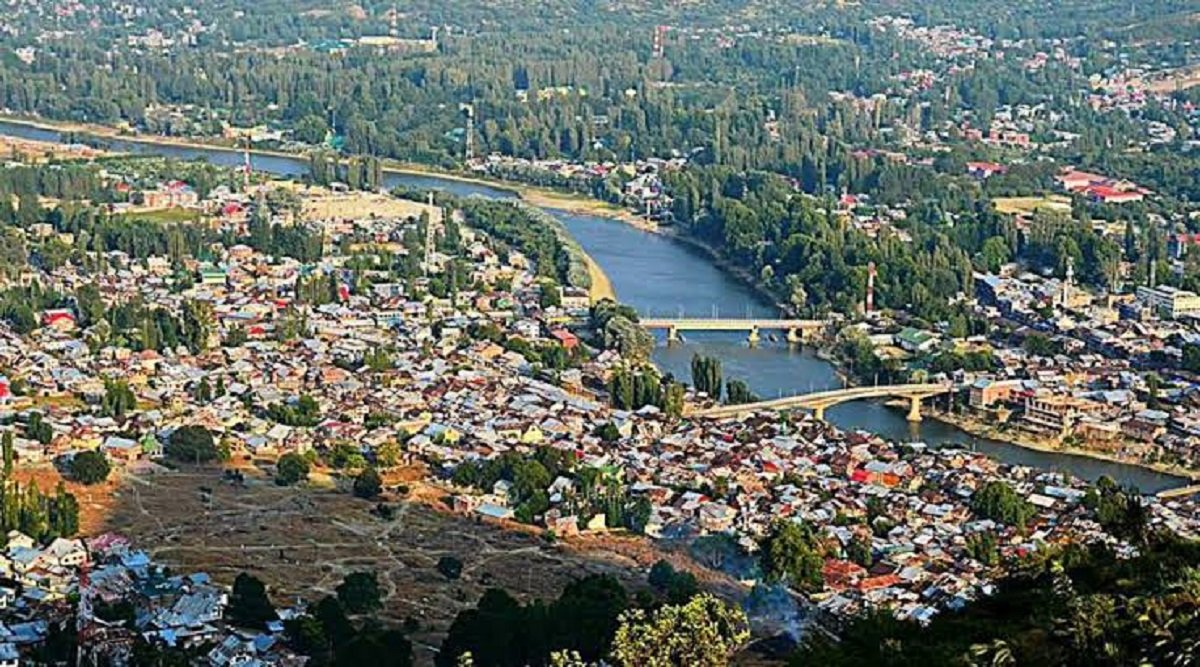
For nearly 2,000 years, Baramulla has stood at the gateway to the Kashmir Valley. Today, almost anyone who lives here can tell you what’s gone wrong.
Roads around Main Chowk are riddled with potholes, drains overflow after even a little rain, parks have slowly disappeared, and government offices are scattered all over town, forcing people to run from one building to another just to get basic work done.
None of these problems are new. The district administration knows them, local traders live with them every day, and the Army has seen them for years.
Everyone understands what needs fixing, but what Baramulla has been missing is a clear plan that assigns responsibility, sets deadlines, and makes sure every promise is followed through.
That plan now exists, and it shifts the public discourse beyond politics by treating Baramulla’s long-standing problems as issues that can be solved through planning, coordination and execution.
The blueprint lays out six practical steps to transform Baramulla by 2040. Most of the projects are already funded or underway. The idea is simple: bring every project under one coordinated plan.
The cost is estimated at ₹500 crore to ₹1,000 crore over five to seven years. Money was never the biggest hurdle. Coordination was, and this blueprint is designed to provide it.
Start with security, because nothing in Baramulla moves without it.
The town hosts the 19 Infantry Division, the Dagger Division, whose presence has anchored stability for decades and made civic planning possible in the first place.
But the Division’s footprint extends well past the barracks, running empowerment centres, a fashion-design school, and computer training for local youth. Its Aman Yatra programme has folded schoolchildren into structured civic life, and in 2023 a General Officer Commanding personally led a new cycling club to Eco Park.
That civil-military relationship has produced real goodwill, but it has never been written into a formal land agreement.
A defence-civil land-rationalisation framework, modeled on cantonment arrangements used elsewhere in India, would let the Division consolidate into a tighter, still defensible footprint while freeing carriageway and open space for the town.
Land, not cash, is Baramulla’s scarcest asset, and the Army holds more of it than anyone else. Settling that question is the precondition for nearly everything that follows.
Once land opens up, the plan points it toward the town’s most obvious waste of space: the ageing PDD Colony, a staff-housing estate occupying a large central plot at a fraction of its potential value.
Redeveloped, it could house a consolidated Baramulla Secretariat, folding the Deputy Commissioner’s office and all district departments into one address with modern digital-governance infrastructure.
Staff displaced by the move would be rehoused on-site, and the smaller plots vacated elsewhere would convert directly into parks and parking, the two amenities Baramulla has been starved of longest.
Consolidation cannot come at the cost of security discipline, and the plan is careful about this.
Near Rangwar, the Army maintains a firing range central to weapons training throughout North Kashmir, and nothing about the redevelopment touches it.
Instead, the blueprint calls for permanent safety buffers drawn into the master plan now, so that all future roads and buildings route around the range from the design stage rather than colliding with it later.
It costs nothing but administrative will, and it prevents a far costlier mistake down the line.
Healthcare exposes the sharpest failure of current infrastructure. Government Medical College Baramulla treats close to 4,000 outpatients daily, the largest tertiary catchment in North Kashmir, and patients reach it through the same congested National Highway 1 corridor that carries all Srinagar-Uri traffic straight past the town center.
The fix is already underway: the Srinagar-Baramulla four-laning project is roughly 80 percent complete and will cut travel time from 90 minutes to 45.
What remains is a matter of aim.
The Pattan and Baramulla bypasses under construction should include a dedicated, clearly signed spur into the GMC campus, paired with an ambulance-priority lane on the final approach.
A shorter journey to the hospital can make the difference between life and death.
These ideas work best when they come together as one vision instead of a collection of unrelated projects.
The plan focuses on five big projects.
It proposes a modern transport hub with smart parking and a new bus terminal. It would turn the Jhelum riverfront into a heritage district, linking the shrine, temple, gurdwara, church and the ancient Ushkara site through a walkable trail. It also envisions a Health, Education and Innovation Campus built around Government Medical College, local colleges and the new Secretariat.
Better footpaths and digital public services would make everyday life easier, while restored parks and sports facilities, led by a revived Cariappa Park, would bring much-needed public spaces back to the town.
None of this happens through good intentions alone. The plan’s final and most consequential move is institutional: a quarterly Urban Development Council bringing together the Deputy Commissioner, local police, public utilities, planning agencies, and the Division’s civil-liaison staff, empowered to assign each of the six solutions a dedicated owner, a budget line, and a delivery date.
Cities rarely fail for lack of good ideas. They falter when no one takes ownership of delivering them, and this council is designed to provide that accountability.
History made Baramulla the gateway to Kashmir. What happens over the next fourteen years will decide whether it becomes the gateway to Kashmir’s future or one more town where a good plan gathered dust while officials debated who owned it.
Security, healthcare, connectivity, and public investment are aligned in the same direction for the first time in decades.
The debate over what Baramulla needs is finished.
The only open question is whether the government, the Army, and the citizens choose to build it.
- The author is a graduate of REC/NIT Srinagar and a former Director General of the Directorate General of Quality Assurance under the Ministry of Defence. He is currently an advisor to Bharat Electronics Limited, and can be reached at [email protected].