
By Syed Nissar H. Gilani
My grandson Raed was born on April 12, 2012, in a private nursing home in Srinagar, and the house filled with the noise a family makes when it has been waiting for good news.
Calls came in from uncles in Jammu, cousins in Delhi, and neighbours who barely knew us.
Then his chest tightened with infection, and the pediatricians sent him straight to G.B. Pant Children’s Hospital in the cantonment area.
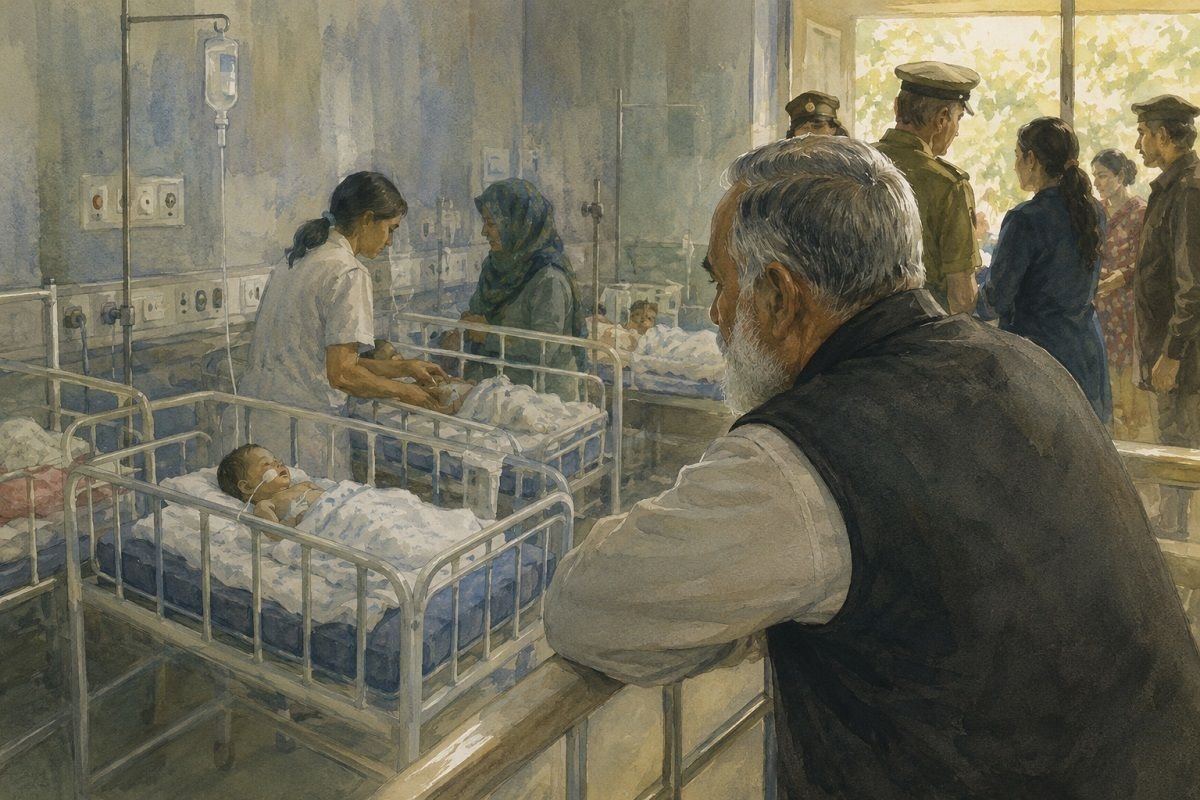
I spent the next several days standing beside his crib while nurses moved through a ward so full that beds nearly touched.
He got oxygen, fluids, and the attention that comes from people who have learned to work fast without looking rushed.
Standing there long enough, a person starts to notice things the staff has stopped seeing.
A foreign woman came through the ward with police officers beside her, stopping at particular prams, saying little. Outside the ICU, other women handed out toffees to visitors, as if marking an occasion nobody had announced.
Foreign visitors are not common in that ward, and unidentified ones are barred outright, so her presence pulled every head toward her without a word being spoken.
I asked the then Medical Superintendent, Dr. Jaweed Chaudary, what was going on. His answer reset how I understood the hospital I had been sitting in all week.
Infants get left near the gates or found in public spaces around the city, he told me, and the hospital takes them in, treats them, and raises them toward health because that is the job, whatever the circumstances of their birth.
Once they recover, they become eligible for adoption, and the police visits I had been watching were part of the documents that hands a child from the state to a family.
The foreign woman, it turned out, ran an NGO and wanted permission to adopt some of these infants.
Indian policy bars foreign nationals from adopting abandoned children, a rule built to keep oversight inside the country, so her request went nowhere.
Two of those infants, a boy and a girl, were adopted by a couple from Srinagar I have stayed close to since. They are now in ninth grade at a well-regarded school, raised as brother and sister, and doing well by every measure that matters to a parent.
Their story is the good outcome. It also happens to be rare, and rarity is the problem worth sitting with.
Consider what desperation without a system looks like elsewhere first.
In April 1975, during the collapse of South Vietnam, the United States ran Operation Babylift, an effort to move more than three thousand orphans out of the country by air. On April 4, a C-5A Galaxy carrying 314 people, 243 of them infants and children, lost its rear cargo door at 23,000 feet. The explosive decompression damaged the flight controls, and Captain Dennis “Bud” Traynor still managed to bring the crippled plane back toward Saigon, putting it down in a rice paddy short of the runway.
One hundred and thirty-eight people died. One hundred and seventy-six survived, including 149 infants pulled from the wreckage still strapped into their improvised cribs.
Even inside a catastrophe like that, the instinct to protect an infant held.
Germany built its Babyklappe decades ago, a padded, monitored box set into a hospital or clinic wall where a parent in crisis can leave a newborn anonymously and walk away without prosecution.
An alarm alerts staff within seconds, and the child gets immediate care and a legal path into adoption.
Japan runs something similar, South Korea does too. The United States has Safe Haven Baby Boxes installed at fire stations and hospitals throughout dozens of states, built on the same premise: give a frightened parent a legal, monitored option, and fewer children end up in dumpsters or stairwells.
Kashmir has no such option. Newspapers here carry the grim record: infants left in roadside bins, on shrine steps, and in alleys where help comes too late.
G.B. Pant Hospital does the work of catching what it can, staffed by people who treat abandonment as a medical emergency rather than a moral failure belonging to someone else. But a hospital reacting case by case is not the same thing as a system built to intercept a crisis before it turns fatal.
What Kashmir needs is not complicated, and other countries have already built the blueprint.
State-sanctioned cradles at major hospitals, staffed and monitored, where a parent can leave a newborn without fear of arrest, would convert a hidden tragedy into a manageable one.
Pair that with clear legal protocols and a regulated adoption process, and Srinagar could offer the boy and girl now in ninth grade something better than an exception. It could offer them a rule.
- The author is a former civil servant from the administrative service. He can be reached at [email protected].