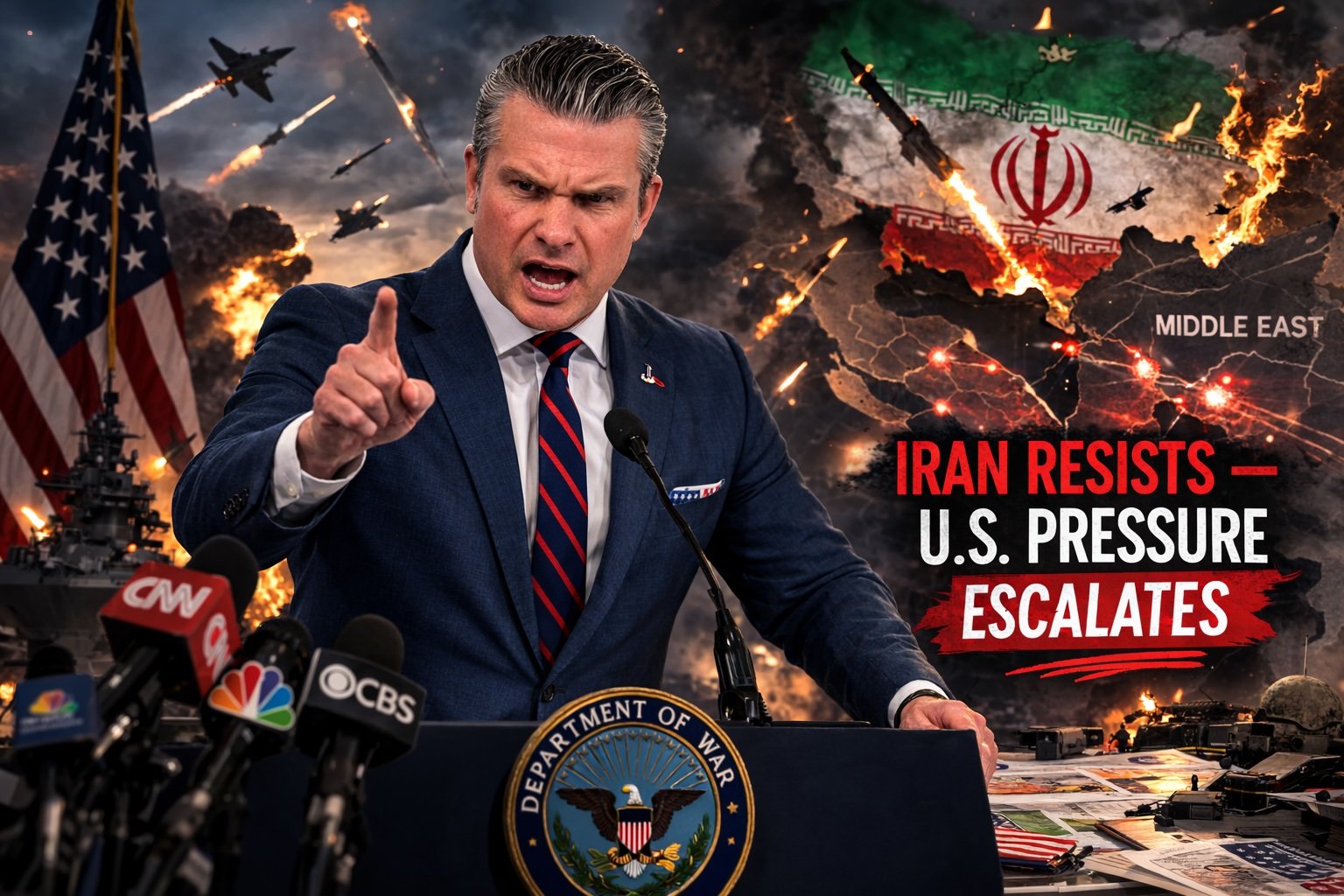
London — Mounting frustration within the Trump administration over Iran’s continued resistance in the expanding Middle East conflict spilled into public view Friday when US War Secretary Pete Hegseth launched an unusually combative attack on American news organisations, accusing them of undermining the country’s war effort.
At a tense Pentagon press conference, Hegseth delivered an unusually combative rebuke of major media outlets, accusing them of deliberately framing headlines to portray the administration’s campaign against Iran as faltering.
“People look up at the TV and they see banners, headlines — and I know they’re written intentionally,” Hegseth said. “For example: ‘Mideast War Intensifies.’ What should the banner read instead? How about: ‘Iran Increasingly Desperate.’”
His remarks highlighted growing irritation inside the administration as Iran continues to resist US pressure despite weeks of military strikes. While officials in Washington insist the Iranian military has been severely degraded, Tehran has shown little sign of capitulating, and Iranian leaders continue to appear publicly, projecting defiance.
“Another fake headline I saw yesterday: ‘War Widening,’” he said. “Here’s a real headline for an actual patriotic press: ‘Iran Shrinking, Going Underground.’”
Administration officials have repeatedly claimed that U.S. strikes have severely degraded Iran’s military capabilities. Yet Iranian leadership has continued to project defiance, appearing in public and organizing large political demonstrations. Footage broadcast from Tehran on Friday showed Iranian President Masoud Pezeshkian participating in a Quds Day march, contradicting claims from some U.S. officials that Iranian leaders were “cowering” or hiding underground.
Trump and his officials have repeatedly claimed that US strikes have severely degraded Iran’s military capabilities. Yet Iranian leadership has continued to project defiance, appearing in public and organising large political demonstrations.
Footage broadcast from Tehran on Friday showed Iranian President Masoud Pezeshkian and other top leadership participating in a Quds Day rallies alongside large crowds, contradicting claims from US officials that Iran’s leadership was “cowering” underground.
Rather than directly address reports questioning aspects of the war strategy, Hegseth directed his anger toward journalists, arguing that coverage emphasising the war’s escalation or operational challenges was misleading.
The war secretary also singled out CNN, dismissing a report that suggested the Trump administration had underestimated how the war could disrupt shipping through the Strait of Hormuz — a critical maritime route for global oil supplies.
“CNN doesn’t think we thought of that,” Hegseth said. “It’s a fundamentally unserious report.”
He added pointedly: “The sooner David Ellison takes over that network, the better”, referencing a proposed corporate restructuring that could place the network under leadership perceived to be more sympathetic to the administration.
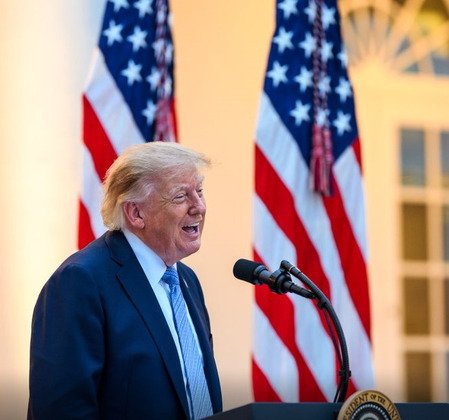
President Trump echoed the administration’s frustration earlier in the day, sharply criticising major American newspapers and television networks for what he called unfair and inaccurate coverage of the conflict.
“Iran’s Navy is gone, their Air Force is no longer, missiles, drones, and everything else are being decimated, and their leaders have been wiped from the face of the earth,” Trump said. “Yet if you read the failing New York Times, you would incorrectly think that we are not winning.”
Trump also accused outlets such as CNN and The New York Times of deliberately ignoring what he described as clear American military successes.
The administration’s increasingly aggressive rhetoric toward the press comes as reports continue to emerge questioning aspects of the war’s planning and execution.
Analysts say the clash reflects deeper frustration within the administration as the conflict proves more complicated than anticipated.
Media experts and political scientists have warned that attacks on critical reporting risk undermining one of the central mechanisms of democratic accountability during wartime.
“A critical press is the most patriotic press one can have,” University of South Carolina political scientist David Darmofal wrote on social media following Hegseth’s remarks. “That’s how democratic systems ensure governments remain accountable.”
Others argued that the administration’s demand for a “patriotic press” suggests a push for narrative control rather than factual accuracy.
“The public would still see the war on their screens,” media analyst Colby Hall wrote. “What they would lose is the independent reporting that helps them understand what the war actually means.”
The confrontation also reflects a broader pattern in which administration officials have grown increasingly hostile toward outlets reporting on operational challenges in the conflict. Some publications have reported restricted access to briefings and officials after publishing investigative reports on the war’s planning.
Despite the criticism, Pentagon leaders continue to insist the campaign against Iran is succeeding.
In closing his remarks, Hegseth reiterated that U.S. forces were “decimating the radical Iranian regime’s military” before urging Americans to pray for US troops.
“We serve God, the troops, the country, the Constitution and the president of the United States,” he said. “And we answer only to those.”
But as Iran continues to defy Washington and the conflict shows no immediate sign of ending, the administration now appears to be fighting a second battle — over how the war itself is portrayed to the American public.