By Saqia Muzafar
Srinagar- As winter tightens its grip over Kashmir, Saleema, 55, is selling the last sacks of charcoal she prepared after the apple season ended earlier this year. Stored in a corner of her home, the charcoal is sold to neighbours and familiar buyers who arrive through the day.
The earnings are modest, but carefully counted.
“I sell one sack for only Rs 300, but this is my own earning,” Saleema said. “It may not be much, but it helps me buy what we need without asking anyone.”
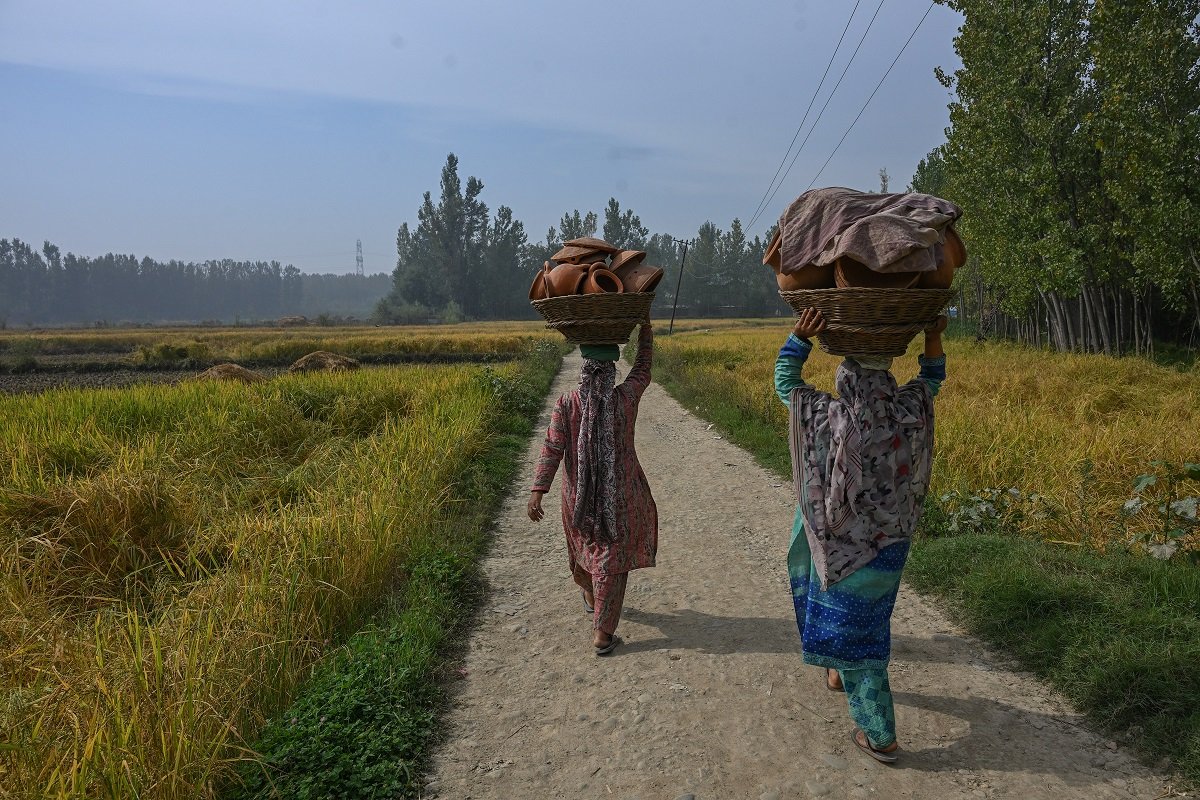
Across rural Kashmir, women engage in a range of seasonal, home-based livelihoods that become more visible as winter approaches. Carried out within villages and largely from home or fields, this work follows patterns women have long been familiar with.
From collecting and selling fallen apples, locally known as giraan, to making charcoal and drying winter produce, these activities form an informal economy that allows women to earn on their own terms and manage their own income.
“The income from farm produce usually goes to the men in the family,” Saleema said.
“These small things, like making charcoal from twigs or selling fallen apples, are our own work. We work hard for it, and whatever we earn from this stays with us.”
Kitchen Gardens as Income Spaces
Kitchen gardens form another important source of income for rural women during this period. Vegetables grown around homes are sold locally, adding to household cash reserves.
“I grow all kinds of vegetables in my kitchen garden, including kidney beans, chillies, leafy greens, and garlic,” said Naseema Akther, a resident of Tiken village in Pulwama district. “I do not depend entirely on my husband for money.”
She said she has saved nearly ₹10,000 from selling vegetables grown at home. “With this income, I buy household essentials and things for myself. Sometimes, I also support my husband and children with this money,” she said.
Different Villages, Similar Patterns
While the nature of work varies by location, the pattern remains consistent across rural areas. In apple-growing belts, women collect and sell fallen fruit once orchards are cleared. In other regions, charcoal making and the sale of dried winter produce dominate the season.
“After harvesting apples, we cut branches and collect dry leaves and residues. That is when we start making charcoal. This work begins in autumn and continues during winter,” a woman from Shopian said.
“These activities are repeated every year, we know what sells and when.”
The scale of earnings differs from household to household, depending on the availability of raw material, demand, and local networks.
Managing Their Own Earnings
Women said they usually decide how the money they earn is spent. The income is commonly used for groceries, fuel, electricity bills, medicines, school-related expenses, and other household needs during winter.
“This money is for the house,” said a woman who sells eggs and dried vegetables. “We keep it with us and use it when needed.”
Several women said household expenses are often planned around earning seasons, knowing that opportunities for cash generation reduce during the colder month.
Officials at the Hub for Empowerment of Women at the Social Welfare Office in Pulwama said seasonal livelihoods play a significant role in women’s economic participation.
An official from the department said economic independence depends on access to income-generating opportunities. “While government and private jobs exist, there is a lot of saturation. Many rural women earn their livelihood from home-based activities,” the official said.
She added that the focus is on strengthening household-level income sources. “Kitchen gardens, orchards, fallen apples, and charcoal making use resources already available at home. This makes it easier for women to earn without additional burden,” she said.
Knowledge Passed Down
Much of the work women engage in is learned informally within families. Techniques for drying vegetables, identifying usable fallen apples, and making charcoal are passed down over generations.
“My mother taught me how to dry vegetables and store them,” said Jameeela Akhter, a woman from Kulgam engaged in seasonal selling.
Several women said younger family members observe and assist, though not all intend to continue the work. Some said daughters help during peak seasons but prefer education or salaried jobs in the future.
“This work has always been there,” Jameela said. “We learned it by watching our elders.”
For many women, income-generating work is carried out alongside household responsibilities.
“We do this work in between everything else,” said Naseema. “There is no fixed time. Sometimes we work early, sometimes late. Whatever needs to be done at home comes first, then we do this.”
Women involved said the lack of fixed hours allows flexibility but also stretches the workday, particularly during months when daylight hours are short.
While these small seasonal incomes do not transform lives, they offer something many women value deeply. The ability to earn, decide, and spend independently, even in limited amounts, gives them a measure of control within otherwise constrained circumstances.