Srinagar- The familiar request for a cigarette is met with an unexpected answer. There are none to be found. No tobacco tucked behind shop counters, no casual smoking outside kiosks, no sign of a habit that once shaped everyday life in this South Kashmir village.
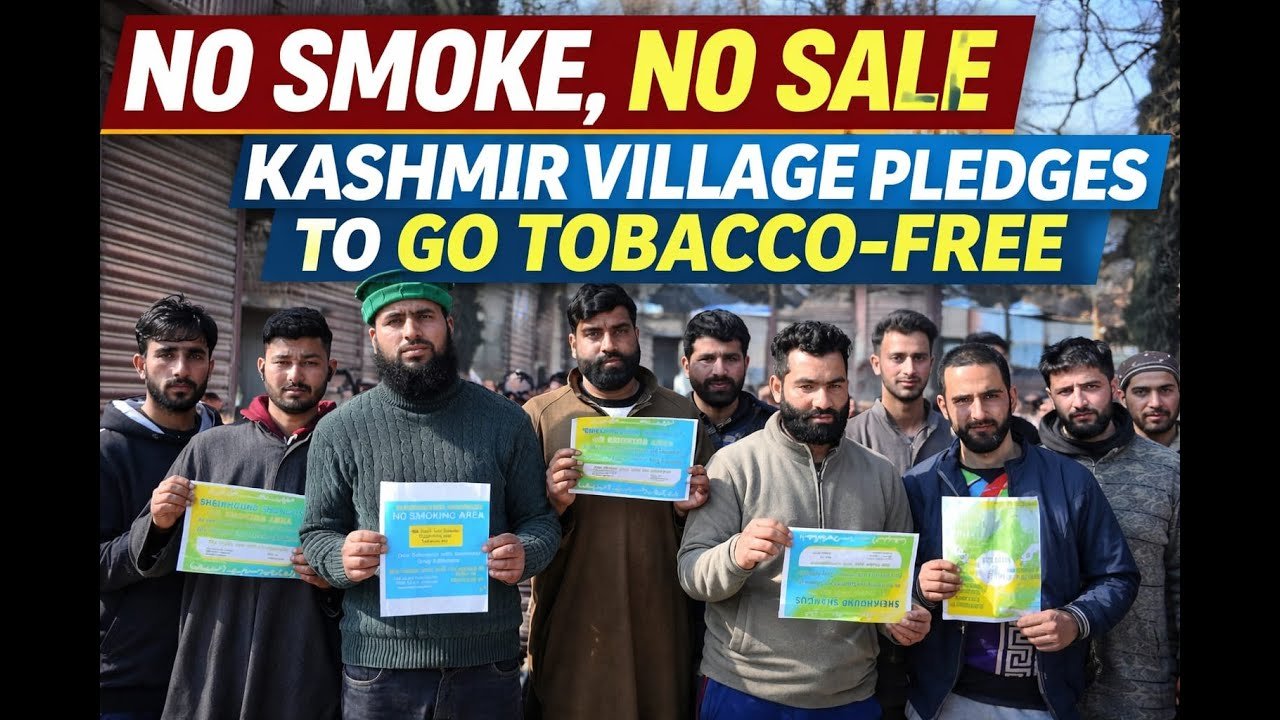
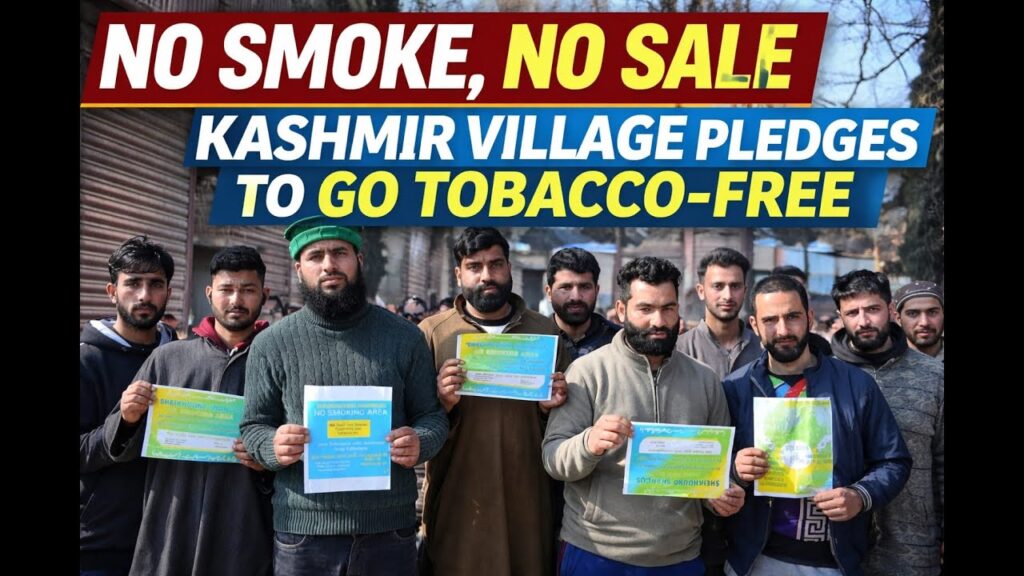
That absence is deliberate. In Sheikhgund Shangus of Anantnag district, residents have collectively decided to give up cigarettes and all tobacco products, declaring their village a tobacco-free zone.
The decision did not emerge from a government order or a health department drive. It began with conversations among villagers who were increasingly worried about what smoking and tobacco use were doing to their children and youth.
Locals recall how men would gather around kiosks, chatting over cigarettes or tobacco, often in spaces where children played nearby. “We realised this was normalising a habit that was slowly harming the next generation,” said Mir Jaffar, one resident who helped initiate the move.
Concern over rising cancer cases in Kashmir added urgency to the discussions.
The tipping point came when shopkeepers agreed to dismantle tobacco counters and stop selling cigarettes altogether, even though many depended on these items for daily earnings.
“It was not an easy decision,” Tariq Mir, a shopkeeper told Kashmir Observer.
“Selling cigarettes brought in a few hundred rupees every day. But when we thought about the future of our children, the loss felt small.”
The initiative soon moved beyond individual choices and took on a collective character. Sermons and discussions at the local mosque became spaces for reflection and commitment.
Visitors to the village are now informed that Sheikhgund Shangus is a no-smoking zone, and anyone asking for cigarettes is politely but firmly turned away.
“People would come here and ask for tobacco or a hookah,” said Mohammad Hussain Malik. “Then I started thinking about the children around us and the habits they might pick up. That is when I decided to dismantle the entire top part of my hookah” he added.
Residents say the change has already begun to show. Elderly men who had smoked for decades have quit. Young boys who once smoked secretly are no longer seen doing so.
With fewer idle gatherings around shops, villagers say there is a visible shift in how young people are spending their time. “Many have also begun to question the cost of smoking, particularly unemployed youth who were spending thousands of rupees each month on cigarettes,” Tariq said.
What makes the initiative distinctive is the absence of coercion. There are no fines or formal punishments. Instead, violations are treated as a matter of collective responsibility and social accountability. “This is not about shaming anyone,” a community member said. “It is about reminding each other why we started this.”
The move by Sheikhgund Shangus has begun to attract attention from neighbouring villages, with residents visiting to understand how consensus was built. Locals here believe their experience offers a simple lesson. Public health, they say, does not always begin in hospitals or policy files. Sometimes, it begins in small villages, with people willing to give up familiar habits for the sake of those who come after them.
For Sheikhgund Shangus, the pledge is ongoing. Villagers know the challenge now lies in sustaining the resolve. Yet, for a community that has chosen health over habit, the journey itself has already reshaped daily life.